Showing posts with label Case wins for Matthew ruff. Show all posts

Tuesday, January 13, 2026

Verified 2025 Case Wins For Attorney Matthew Ruff


In 2025, DUI attorney Matthew Ruff secured several verified legal victories in Southern California, ranging from full dismissals to jury acquittals. His recorded successes for the year include:


Jury Acquittals and Not Guilty Verdicts 
  • Underage DUI (Los Angeles): In April 2025, Ruff secured a "Not Guilty" verdict for a client in an underage DUI case. The defense successfully challenged complex legal issues, leading the jury to acquit on all charges.
  • Torrance Jury Trial: In October 2025, a Torrance jury returned a "Not Guilty" verdictafter Ruff successfully argued that the prosecution's evidence was insufficient to support a conviction. 
Case Dismissals (Criminal Court)
  • 3rd Time DUI Dismissed (Torrance): In April 2025, Ruff obtained a dismissal of a third-time DUI charge in Los Angeles Superior Court. The victory was achieved by arguing a violation of 4th Amendment rights, resulting in the DUI being dropped.
  • DUI with Injury & Hit and Run (Torrance): In July 2025, major charges including DUI with injury, chemical test refusal, and hit-and-run with injury were fully dismissed.
  • Commercial Driver Dismissal (Oceano Dunes): Ruff secured a dismissal of DUI charges for a commercial driver facing a lifetime license ban by using retrograde extrapolation to prove the client's BAC was likely below 0.08% at the time of driving.
  • Public Intoxication (Santa Monica): In November 2025, a drunk-in-public charge was dismissed and the client's arrest record was sealed to protect future employment.
  • DUI Reduced to "Dry Reckless": In December 2025, a client's DUI charge was reduced to a non-alcohol-related "dry reckless" (VC 23103), which was subsequently expunged. 
DMV Administrative Victories (License Saved) 
  • 911 Anonymous Tip Challenge (Torrance): In July 2025, the DMV set aside a license suspension for a client with a 0.16% BAC after Ruff proved the initial police stop based on an anonymous 911 call was unlawful.
  • Suppression of High BAC (Long Beach): In September 2025, a license suspension was overturned after Ruff uncovered regulatory violations, resulting in the suppression of breath test results recorded at 0.16%/0.17%.
  • Refusal Suspension Reversal (Hermosa Beach): In November 2025, a 0.11% breath test case resulted in an order of set-aside, clearing the arrest from the client's record and avoiding an ignition interlock requirement.
  • Denied Continuance Victory (Valencia): In December 2025, Ruff successfully opposed a DMV request for a continuance. Because the DMV lacked the necessary blood results at the time of the hearing, the suspension was set aside and the license reinstated. 

Sunday, November 23, 2025

Torrance DUI Attorney Wins Case


Torrance DUI Attorney

Top Tier Torrance DUI Attorney Matthew Ruff wins case involving a .21 BAC chemical test.

Matthew Ruff's unparalleled expertise in DUI law was pivotal in dismantling a case where critical evidence was overlooked. His meticulous examination exposed procedural lapses, securing a landmark victory that restored his client's driving privileges by the DMV.  

The issue in the case was whether the government could prove the client was driving within 3 hours of the time of driving to allow for the VC 23152 permissive inference to attach.  This evidentiary inference, sometimes referred to as the “3 hour presumption”, was never established during the hearing.

The case win means the client will have his records expunged of the DWI arrest and qualify him for a no cost duplicate of his hard copy license, taken from him at the time of his arrest.


Thursday, January 23, 2025

DUI Attorney Matthew Ruff Celebrates 30 Year Anniversary


Matthew J Ruff, DUI Attorney

This year Matthew celebrates 30 years defending clients charged with DUI and drunk driving in California.  

With offices located throughout California,  Torrance DUI Attorney Matthew Ruff, Long Beach, Matthew Ruff DUI Attorney, Los Angeles, San Pedro, Huntington Beach and other locations, Matthew is committed to helping people who need representation after a driving under the influence arrest.


Monday, July 11, 2022

Motion In Support of Elimination of The Permissive Inference Pursuant To VC23152(b)

Top DUI Attorney, Matthew Ruff


In DUI cases it is important to present evidence to show your client was not driving with a BAC of .08 at the time of driving.  If no evidence is introduced to refute this, the prosecution will ask to have the trier of fact “presume” the BAC reported was the actual blood alcohol level of your client at the time of driving.

California Vehicle Code Section 23152 (b) in relevant part provides: “In any prosecution under this subdivision, it is a rebuttable presumption that the person had 0.08 percent or more, by weight of alcohol in his or her blood at the time of driving the vehicle if the person had 0.08 percent or more, by weight, of alcohol in his or her blood at the time of the performance of a chemical test within three hours after the driving.”


“A rebuttable presumption requires the trier of fact, given a showing of the preliminary fact (here, that a chemical test result showed plaintiff had a BAC of 0.08 percent or more within three hours of driving), to assume the existence of the presumed fact (here, that plaintiff had been driving with a prohibited BAC) ‘unless and until evidence is introduced which would support a finding of its nonexistence, in which case the trier of fact shall determine the existence or nonexistence of the presumed fact from the evidence and without regard to the presumption.’ [Citation.] In other words, if evidence sufficient to negate the presumed fact is presented, the presumption disappears and “has no further effect”, although ‘inferences may nevertheless be drawn from the same circumstances that gave rise to the presumption in the first place.’” (Coffey v. Shiomoto (2015) 60 Cal.4th 1198, at pp. 1209–1210.)


In this case the testimony of the expert constituted evidence that, if believed, would support a finding of the nonexistence of the presumed fact—that the driver’s BAC was 0.08 or above at the time of driving. The expert’s testimony was founded on the recency of the driver’s drinking and was clear, direct and credible. Thus, the presumption disappeared and the trier of fact was required to weigh all the evidence and inferences to reach a determination regarding the driver’s BAC at the time of driving.  The prosecution was required to rebut the evidence presented and failed to do so.  Here, there was no evidence presented, no expert evidence contradicting the expert’s opinions and conclusions; the prosecution presented no evidence challenging the factual bases of the expert’s opinions.


Based on the evidence presented at the hearing, including the expert testimony, we submit substantial evidence supports the determination that the driver rebutted the three-hour presumption and the weight of the evidence was in the driver’s favor.


Furthermore, in criminal prosecutions special rules apply:


 "The California Supreme Court has held that a jury

instruction phrased as a rebuttable presumption in a criminal case creates an unconstitutional mandatory presumption.

(People v. Roder (1983) 33 Cal.3d 491, 497-505. In accordance with Roder, the jury instructions have

been written as “permissive inferences."


Tuesday, March 1, 2022

Why Did I Receive A Notice of Suspension If I Haven’t Had My DMV Hearing?


 Oftentimes the DMV will send out a notice of suspension when a DMV hearing has already been set.  Why is this?  When you were arrested and released the officer filled out Paperwork and sent it to the DMV regarding the details of the incident. This is called the “Officer Statement” and DS367.  Sometimes the officer fails to check the right boxes that he gave you a copy of the notice of suspension and when this happens the DMV will send out a new notice to ensure the driver was actually served with the paperwork.  The problem originates from the fact that there are two different offices handling the case.  One is the local Driver safety office where the arrest took place.  The second is Sacramento Main Office where the paperwork gets sent after the incident.  

When you hired us as your lawyer and we set up the DMV hearing with the local office the suspension was stopped and stayed pending that hearing.  The second notice that you got comes from Sacramento because they don’t bother to check as it is all done electronically.  

What does this mean for me?  You don’t need to do anything.  The new notice is just a duplicate and your driving privileges remain in effect because the attorney already set up a formal hearing.  The whole thing is another example of the government not being efficient and one hand not knowing what the other is doing.  The California Department of Motor Vehicles is a huge bureaucracy and this type of thing is common.  As your attorney we are handling everything and appreciate that you let us know about the correspondence though as sometimes there are legitimate issues that need to be addressed, fortunately this is not one of them.  Thank you again for retaining our Law Firm to defend you in your DUI case.

Sunday, September 15, 2019

Can A Search Warrant For Blood in a DUI Be Challenged?


Ever since the US Supreme Court announced that forcibly withdrawing blood from a drunk driver is illegal, police all over the State of California have been obtaining search warrants to draw blood in driving under the influence cases.  What I have seen though is many officers are not putting enough information in the warrant affidavits to satisfy the legal requirements of probable cause.  To understand what I am talking about, let’s go into what the law requires for the issuance of a search warrant.

In order for a warrant authorizing a search to be valid the officer seeking it must convince a judge that “probable cause” exists to believe the place or persons to be searched contain evidence of a crime.  Probable cause is generally defined a a “fair probability” that evidence may be found to support a crime.  Probable cause must be established with facts, not conclusions.  What many officers are doing is providing conclusionary statements in the affidavit such as the person was displaying “symptoms of intoxication” instead of articulating the actual observations to let the judge decide.

A “bare bones” affidavit contains nothing more than conclusive statements which lack the facts and circumstances from which a judge can independently determine probable cause. Most affidavits in DUI cases are pre-printed, check the box type forms and therefore officers get lazy in articulating sufficient facts.

As a general rule, a warrant that is issued on insufficient probable cause is subject to a motion to quash.  However, the District Attorney will try to save the warrant by arguing the officer acted in good faith on the judicially authorized warrant and therefore the evidence should not be suppressed.

In response to that argument Counsel should argue that good faith doesn’t apply when the facts show that no reasonable officer would have believed probable cause existed.  This is where the attorney should get into his training and establish he is taught to articulate his or her’s basis to believe probable cause existed, though facts not conclusions.

Torrance DUI Attorney Matthew Ruff has over 25 years experience fighting and winning suppression motions in drunk driving cases throughout California, including Redondo Beach, Los Angeles, Palos Verdes and Manhattan Beach CA.


Thursday, August 22, 2019

Can Police Take Blood From an Unconscious DUI Suspect Without a Warrant?


Yes, according to the United States Supreme Court.  In the case of Mitchell vs. Wisconsin the Justices resolved a long standing issue as to whether law enforcement could perform a warrantless blood draw on a DUI suspect if they are unconscious and unable to give valid consent. 

 The facts of the case are not that uncommon:  Police received a report that Mitchell, who was under the influence of alcohol, climbed into a car and drove away. When found, Mitchell was wandering near a lake, stumbling and slurring his words. A preliminary field breath test revealed a BAC of 0.24% and Mitchell was arrested. On the way to the police station for a more reliable breath test, he lost consciousness and was taken to the hospital instead. His blood was drawn and reflected a BAC of 0.22%. After he was charged with drunk driving offenses, Mitchell moved to suppress the blood test results as obtained in violation of the Fourth Amendment. The State relied on its implied consent law to justify the blood draw. The motion was denied and Mitchell's subsequent convictions were upheld in state court. The U.S. Supreme Court granted certiorari. Held: Vacated and remanded. A blood draw is a search of the person. The Fourth Amendment guards against unreasonable searches and generally requires that a warrant first be obtained. However, the exigent circumstances exception to the warrant requirement applies when the compelling need for official action renders a warrantless search reasonable. In drunk driving cases an exigency exists when (1) BAC evidence is dissipating and (2) some other factor creates pressing health, safety, or law enforcement needs which take priority over a warrant application. Both conditions are met when a drunk-driving suspect is unconscious because this creates a medical emergency requiring treatment and will usually involve the drawing of blood anyway. This could delay the application for a warrant which might distort the evidentiary value of a blood draw. There may be an unusual case where a defendant can show that his blood would not have been drawn if police had not been seeking BAC data, and that police could not have reasonably judged that a warrant application would interfere with other pressing duties. Because Mitchell did not have a chance to attempt to make this showing, the case was remanded for this purpose. ( Courtesy of CCAP).

This case will set the tone for state Courts in deciding whether implied consent laws allow for blood draws without a warrant under their individual state statutes.  In California the Supreme Court is currently deciding that issue in the Arredondo Case.

Sunday, July 21, 2019

Can You Beat A License Suspension on a DUI?

Torrance DUI Lawyer

In California the law requires that a drivers license be suspended for up to three years if a person is arrested for DUI and completes a chemical test that is above the legal limit or refuses to complete a test upon the request of a police officer.  The DMV requires that a person request a formal hearing to challenge the requisite suspension and prove that the Department’s evidence is insufficient to justify the action. Statewide the success rate in winning a DMV hearing is very low.  However, experienced lawyers often prevail much more frequently.
Below is a recent case where Matthew won the hearing on a zero tolerance DUI probation case because of an evidentiary issue he uncovered in the State’s paperwork.


Saturday, May 4, 2019

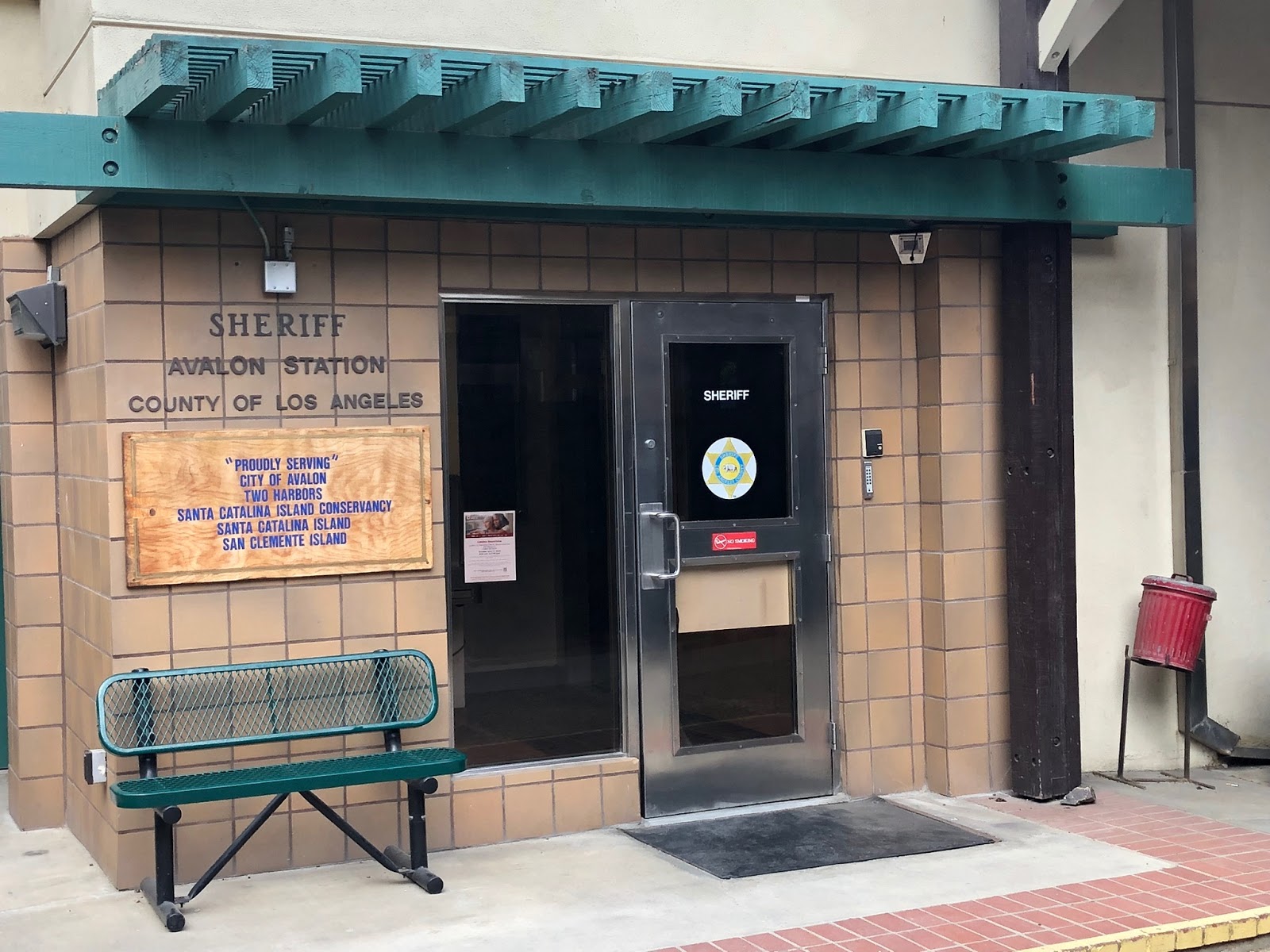
Arrested For DUI or Criminal Charge on Catalina Island?


Top DUI Attorney on Catalina Island 
In search of a criminal defense attorney that can fight charges brought against you on Catalina Island?  Matthew Ruff can help.  Matt has over 30 years experience fighting all types of criminal charges in California.  Matt is a Top Rated Nationally Recognized Lawyer with unparalleled skills and local connections to ensure you get the best results in your case.  The Court in Avalon is part of the Los Angeles Superior Court System and typically only hears cases every other Friday.  If you were released on the Island and given a date to appear in the future to answer to allegations of Public Intoxication, DUI, Theft, Domestic Violence, Drug Possession or any other misdemeanor or Felony charges call Matt for a free case review and assessment of your options and legal defenses.

               Call Matt Direct on His Cell 310-686-1533


Catalina Island DUI on Golf Cart in Avalon

Arrested on Catalina Island?  You Need the services of an experienced criminal defense attorney who can appear for you and fight the charges.  As COVID restrictions ease many people are resuming travel to the island and blowing off some steam having been cooped up for a year or more.  When your vacation results in an unexpected arrest you need an advocate to defend your rights, keep your record clean and save your license.  Criminal Lawyer Matthew Ruff has defended dozens of cases on Catalina ranging from public intoxication, DWI, Drug Charges, Assault, resisting arrest, theft, fishing violations, Domestic Violence and many others.  

Every year thousands of people flock to the Island of Catalina for fun in the sun, fishing, boating and nature.  The land is part of the State of California and law enforcement is provided by the Los Angeles Sheriff.  Criminal statutes are strictly enforced and many folks are arrested and cited for various infractions, misdemeanors and felony offenses.  Matthew defends all criminal violations originating on the Island and the Surrounding Pacific Ocean.  If you have questions about the next steps, wondering if driving a golf cart while drunk is a real crime, or other concerns such as how you are going to find the time to show up in Court, Matthew can help.

During their stay on the island many visitors will rent a Golf Cart to tour the local attractions such as Descanso Beach or Chimes Tower or Avalon Canyon.  The vendors do little to verify your level of intoxication before renting the cart and you drive off for a fun ride.  Unfortunately, if an accident happens and the LASD show up they might smell alcohol on your breath and administer field sobriety tests, if you fail they will arrest you and take you to the local station for a breath or blood test.  In California if a driver is arrested for driving under the influence they are required to submit to a chemical test to determine the alcohol content of their blood, if the officer suspects drugs such as marijuana he or she can also require a urine or blood test in addition to a breath test.  If you are an out of state resident you may decide to refuse all testing, however that can present separate issues with regard to your driving privileges.

Best DUI Attorney on Catalina Island


If you were arrested for DUI in a Golf Cart in Avalon Attorney Matthew Ruff can help.  Is it illegal to drive a golf cart while under the influence?  Yes, the CA Vehicle Code defines a “vehicle” broadly as any device that is propelled by anything other than human power.  In California it is possible to be charged with drunk driving in a golfcart if you are on a public roadway or a location accessible by the public and are driving when you are a .08 or higher BAC or are under the influence of alcohol or any drug.  Fortunately Matt has 30 plus years experience defending good people charged with these offenses.  For example, Matt was hired recently by an out of state resident arrested for DWI in Avalon while on vacation.  The client searched online and found that Matthew was a local attorney who defended cases on the island.  She hired Matt and was able to avoid traveling back to California for the arraignment.  Matt also recently represented a client charged with Public Intoxication after he was found in someone’s backyard in Avalon extremely inebriated.  After some wrangling with the DA Matt got the case dismissed so it wouldn’t affect the client’s criminal record.

Call Top Rated Catalina Island DUI Attorney Matthew Ruff Directly at 310-686-1533

The Island of Catalina has its own Court which handles all criminal cases originating on the Island.  However, all Felony cases are transferred to Long Beach Court on the mainland.   Other charges such as Public Intoxication, assault, Domestic Violence, Fish and Game Violations including poaching and lobster offenses and drug related charges are also prosecuted by the local District Attorney in Avalon.  The Island also sees a fair number of boating under the influence cases, sometimes referred to as BUI, Matt has extensive experience fighting these cases.  The Court is part of the Los Angeles Superior Court system.

California Vehicle Code 23152 is the applicable law for driving under the influence, the crime is a misdemeanor.  If injury was involved the offense is 23153, this offense can be either a felony or a misdemeanor depending on the severity of the alleged injury.  Matthew Ruff has been successful in many cases to have the charges dropped or reduced if the circumstances warrant such relief.  Most cases involve a breath test and Matt is very knowledgeable in challenging the machine used which is a Datamaster Device.

Jail in Avalon


If you were issued a citation to appear in the Catalina Court the law allows for a private attorney to appear for you, thereby saving needless travel expenses.  Matthew has handled countless cases in the Avalon Court and knows the local DA and Judge that will be Hearing your matter.

Call Catalina Island Criminal Defense Attorney Matthew Ruff Direct at 310-686-1533

Top Tier Catalina DUI Attorney Matthew Ruff has the experience defending cases in the Avalon Court before Judge Mirich and Deputy District Attorney Karen Brako.  This experience equates to a better result in your case because he knows the individual proclivities and personalities of the decision makers.  For example, in a case involving possession of drugs the lawyer will take a certain approach that has been effective in the past with that kind of case.  In a public intoxication case a distinctly different approach will be taken in order to try an get charges dismissed or dropped.  Hire the law firm that has the 30 plus years of experience getting results for clients charged with exactly the thing you are facing.

Matthew’s experience handling serious cases recently paid off for a client who hired him on a Felony DUI with Injury case out of Catalina.  The client was from out of state and vacationing in Avalon when an accident occurred with the golf cart, causing the ejection of the passenger on to the street.  A breath test revealed a high BAC above .20.  Matt fought the case, both at the DMV and in Court.  He got the felony charges dropped and beat the case at the DMV license suspension hearing. In another recent case Matt defended a young lady arrested for DWI in a golf cart on the island near downtown.  The client refused to submit to a chemical test and was booked.  Matthew fought the case arguing his client was not driving the vehicle at a time her BAC was at or above the legal limit and was able to get ALL CHARGES DROPPED in June 2022, the best part about it is she never had to come to Court!

 If you or a loved one is facing an upcoming case, call Matt directly at 310-686-1533, in many cases he can appear in Court for you, thereby avoiding expensive travel and time off from work.


Avalon Criminal Courthouse


Sunday, February 11, 2018

Does Submission To An Officer’s Authority Constitute Consent To Draw Blood in a DUI Case?

No, says People vs. Ling (2017) 15 Cal App 5th Supp. 1
The Court held the People bear the burden of proving that a consent was, in fact, freely and voluntarily given. “This burden cannot be discharged by showing no more than acquiescence to a claim of lawful authority.” (Bumper v. North Carolina (1968) 391 U.S. 543, 548.) To be effective, consent must be voluntary. Voluntariness is to be determined by considering the “totality of the circumstances.” It is also the rule that “assent” alone is not necessarily “consent.” “Consent, in law, means a voluntary agreement by a person in the possession and exercise of sufficient mentality to make an intelligent choice, to do something proposed by another . . . . [Assent] means mere passivity or submission, which does not include consent.” Neither is there consent when all we have is the mere submission to an express or implied assertion of authority. Defendant in this case was told that “(b)ecause you’re under arrest for DUI, you have to submit to a chemical test, which is a test of either your breath or your blood.” Never was he asked if he was willing to summit to such a test. Telling him that he “has to submit” to a chemical test of his blood communicates a reality where the chemical test will be conducted against defendant’s will, if necessary. He was also never given the opportunity of choosing between providing a breath sample or a blood sample.

In Ling, the Court found the defendant’s lack of physical or verbal resistance to submitting to a blood test, by itself, does not mean that he had consented to the procedure. In sum, the Court noted that “(t)he People fail to point to any evidence in the record showing that defendant consented to the blood draw nor could they.” The evidence instead shows that defendant submitted to a blood draw and that this submission was due to the officer's expression of lawful authority. As concluded by the Court; “absent evidence to the contrary, it cannot be presumed that individuals under arrest could reasonably construe a direction from an arresting officer that they must take some action as a mere query as to whether they will voluntarily consent to it. Consequently, the totality of the circumstances shows defendant did not consent to the blood draw.” The blood results, therefore, should have been suppressed.

In most DUI arrests the officer will read the suspect an advisement informing him or her of their obligations and rights to submit to a chemical test in the state of California.  Here, that was not done.

It is clear that the arresting officer in this case was either totally oblivious to, or chose to ignore, the plethora of recent (i.e., post Missouri v. McNeely (Apr. 17, 2013) 569 U.S.__ [133 S.Ct. 1552].) cases discussing the need for a full explanation of the V.C. § 23612 implied consent rules, along with evidence that a DUI arrestee do more than merely acquiesce, and actually consents, to a blood or breath test, in order for the results to be admissible in court. The Court in fact makes some reference to the need for law enforcement officers to stay up on the law if their arrests are going be of any benefit. ( Courtesy of Robert Phillips).

The rule in this case is as follows: The results of a blood test in a DUI case are inadmissible absent evidence that the defendant did in fact consent to the taking of a blood sample. A mere submission to authority is not consent.

Monday, June 5, 2017

DRE Use in Marijuana DUI Cases Called Into Question

The use of Drug Recognition Experts in Marijuana DUI investigations is on the rise.  Indeed, the numbers of officers with the enhanced training have proliferated over the last few years, influenced heavily by the changes in the laws related to recreational use of pot.

While training of any kind is certainly a good thing, it is important to not place too much reliance on the DRE.  Certainly cops who go through the block of extra training and are certified as a DRE are better suited to evaluate a suspected drugged driver, however we must be careful to not place too much emphasis on their conclusions.

Indeed, many of the DUI arrests associated with marijuana are based primarily on admissions by the defendant.  If the person admits to have smoked pot or ingested an edible containing THC the Officer builds his investigation with that in mind, often “finding” symptoms to fit within his predetermined conclusion that the driver is impaired due to marijuana.

Recently, the Press Enterprise published an article discussing these issues.  The article can be viewed here Attorney Matthew Ruff Quoted in DUI Marijuana Article.


Friday, December 2, 2016

Military Diversion Motion For DUI

For decades groups such as MADD pressured legislators to get tougher on DUI offenders, however it appears another formidable force has entered the arena with even more political clout- Veterans Groups.  Yes, Veterans are finally getting the thanks they are deserved by recognition of the fact that those that put their life on the line for their Country often come home with conditions that stay with them forever.  Legislators are now enacting laws to help Military Veterans, and active duty military, avoid the stigma of a criminal conviction and get them treatment.

An example is California Penal Code §1001.80 which offers military diversion from criminal prosecution for all Misdemeanor DUI offenses.  Eligibility is included for all past and current veterans, whether they were in combat or not, as long as there is a showing that they may be, as a result of their military service, suffering sexual trauma, traumatic brain injury, PTSD, substance abuse, or mental health problems as a result of their military service.
NO MEDICAL DIAGNOSIS IS REQUIRED!  As the threshold for eligibility is simply that the person “MAY” be suffering from one or more of the enumerated conditions.

Indeed, for those who sacrifice much to serve our country in the armed forces it is nice to see a little payback from the government and a good example of that is the newly enacted laws in a California allowing veterans and active duty military personnel to avoid a conviction for certain types of criminal offenses such as DUI and drunk driving.  

Recently the second district Court of Appeal in California ruled that DUI offenses are eligible for military diversion in Los Angeles County.  This means that active duty military personnel and veterans can get their drunk driving charges dismissed Pursuant to Penal Code 1001.80 if they suffer from ptsd, mental health issues or substance abuse issues as a result of their military service.  Recently, attorney Matthew Ruff got driving under the influence charges dropped for a client in Manhattan Beach California even though his blood alcohol level was twice the legal limit.  A Torrance Court Judge allowed the serviceman to get his charges dismissed following successful completion of counseling.

It should be noted that it is NOT necessary to show an actual physical or mental injury in order to have the case dismissed under the current state law.  For example, recently the attorney got a DUI case dismissed involving an accident and BAC of .17 where the service person was able to demonstrate she acquired a drinking problem as a result of her military service.  Matthew was able to show she met the qualifications of the law and was entitled to enter into a Diversion program with all charges ultimately being Dismissed.

The benefit of military diversion is that if the client performs satisfactorily during the period of Military Diversion, the court will dismiss the criminal charges. In addition, upon successful completion of the Military Diversion program, the arrest upon which the diversion was based shall be deemed to have never occurred, except the arrest upon which the diversion was based may be disclosed by the Department of Justice in response to a peace officer application request, and the defendant is still obligated to disclose the arrest in response to a direct question contained in a questionnaire or application for a position as a peace officer, as defined in Pen. Code § 830. 

So, what must be shown in order to qualify for military diversion for DUI in California ?


In short, to be granted Military Diversion, Counsel is required to provide an assessment or other evidence confirming The defendant is a current or former member of the military and may be suffering from sexual trauma, traumatic brain injury, post-traumatic stress disorder, substance abuse, or mental health problem, as a result of his or her military service. The defense is also required to provide a recommended treatment plan for the accused sexual trauma, traumatic brain injury, post-traumatic stress disorder, substance abuse, or mental health problem. 

Assuming the defendant is granted the request for military diversion the Court will impose certain conditions that must be satisfied in order to earn a dismissal.  The terms of the grant of diversion can vary from Court to Court.  Here is a list of some common requirements:

EXAMPLES OF CONDITIONS OF MILITARY DIVERSION IN DUI CASES:
    1. Twelve to 24 months of treatment

    2. First Conviction DUI Program, minimum AB541, and MADD Impact Panel.

    3. Random drug and alcohol testing by the treatment provider. 

    4. Substance abuse or other counselling, therapy or treatment as recommended in the assessment and/or treatment plan. 

    5. Written progress reports from care/treatment providers due every 90 days.


Who is Eligible For A Grant Of Military Diversion?

    1. Defendant is charged with a misdemeanor or misdemeanors only. 

    2. Defendant is a current or former member of the United States military. 

    3. Defendant may be suffering from sexual trauma, traumatic brain injury, post-traumatic stress disorder, substance abuse, or mental health problems as a result of his or her military service. 

    4. Defendant consents to being placed on Military Diversion and waives his or her rights to a speedy trial. 


    5. Defendant has not been granted Military Diversion for any other case. 


Here is a sample of a motion that can be filed in criminal court requesting military diversion for a DWI case:

MEMORANDUM OF POINTS AND AUTHORITIES 
Counsel requests this Court to place the defendant in a pretrial military diversion program, as specified under California Penal Code section 1001.80.

(Documentation of the defendant's PTSD, mental health issues, trauma or substance abuse problems should be outlined and attached to the motion and presented to the Court)

Section 1001.80 became law in 2015. It creates a diversion program where a serviceperson is accused of a misdemeanor and appears to be suffering from mental health problems resulting from his/her military service, including post-traumatic stress disorder and substance abuse. The legislation was created with the express purpose of allowing veterans who are suffering from mental health concerns to not only "get proper services" but also, importantly, to "allow them to be more easily employed in the future by keeping the crime off their record if they complete their diversion program successfully." (Sen. Loni Hancock, Chair, Senate Committee on Public Safety; Bill Author's Summary, S.B. 1227; Hearing Date: April 8, 2014.) The legislation passed overwhelmingly, and reflects our nation's growing understanding of the mental health concerns faced by our members of the military. (See, e.g. VAL WILLINGHAM, "Study: Rates of Many Mental Health Disorders Much Higher in Soldiers Than in Civilians," CNN.com, March 4, 2014.)


LEGAL AUTHORITY
The authority for a military diversion motion in California is found in Penal Code section 1001.80 applies "whenever a case is before a court on an accusatory pleading" for a misdemeanor and (1) "[t]he defendant was, or currently is a member of the military," and (2) "[t]he defendant may be suffering from sexual trauma, traumatic brain injury, post-traumatic stress disorder, substance abuse, or mental health problems as a result of his or her military service." (Penal Code section 1001.80(a).) Upon motion by the defense, where a defendant is found to match these criteria, he can be placed in pretrial diversion program. (Penal Code § 1001.80(b).)

This recently-created military diversion legislation is uniquely broad, in that it places almost no restrictions on eligibility. Unlike diversion programs such as Deferred Entry of Judgment, military diversion under section 1001.80 does not specify that only certain types of misdemeanors are eligible, nor does it preclude servicemen with prior records. It never specifies that the diversion is only available once, nor limit the number of offenses for which a serviceperson can be diverted.

Defendant is clearly eligible for pre-trial diversion for his dui charges in this case.  The motion for military diversion can be made at any point prior to trial.  Most Judges will agree to hear the motion after the District Attorney has reviewed documents and has had an opportunity to object, when appropriate.

Sunday, November 24, 2013

Attorney Matthew Ruff Wins A DMV Set Aside In Under 21 DUI Case


Earlier this month Matthew Ruff obtained a set aside on an under age 21 DUI out of Kern County.  The attorney established that although the officer swore under oath that the accused was driving under the influence and had a .09%BAC, well above the zero tolerance standard allowed for under 21 drivers, he got the DMV to dismiss and set aside the action on evidentiary issues related to the case.  For those that have never seen what a "set aside" letter looks like, we have attached the actual order.  The driver gets her license back with no scar on her record.

These types of wins are difficult to obtain in zero tolerance cases where the DMV deems any level of alcohol to be sufficient to suspend a licnse.  In this particular case, Matthew was able to establish that although the client did have a .09 in her blood at the time of arrest, that was not her blood alcohol level at the time she may have been driving her car.  The hearing Judge took testimony from the arresting officer and in rebuttal the attorney called two witnesses that were present in the car with the respondent at the time she was contacted by the police.